
Brain-Penetrant molecular glue degraders at AACR 2025
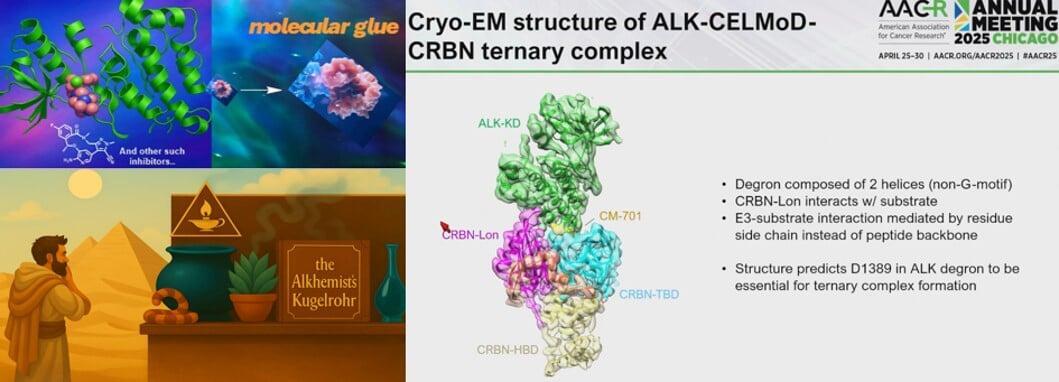
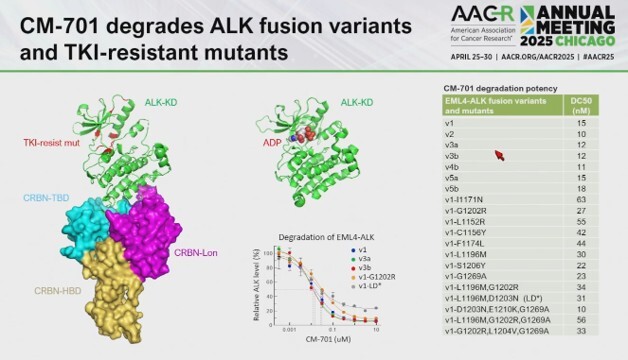
This year’s spring AACR came and went, and the work presented by my former colleague on brain-penetrant molecular glues for ALK-targeted therapies stood out as one of the most well-received talks. As previewed in my previous Kugelrohr blog post, a key takeaway from this effort was the identification of a novel degron — one where the molecular glue binding site is distal from the ATP pocket. While the full medchem story is yet to be published, this presentation offered an exciting glimpse into the evolving potential of glue degraders in oncology. This slide to the left from AACR 2025 showcases 701, a glue degrader that induces selective degradation of ALK fusion variants including many that resist standard TKI treatments. Degradation activity across a panel of clinically relevant ALK mutations is shown and structural insights (shoutout to the ternary complex Cryo-EM) reveal how 701 achieves this selectivity.
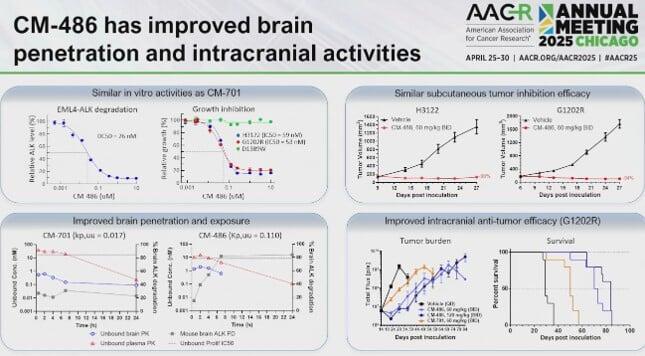
📌 To briefly summarize and provide clinical implications. This research further provides examples that molecular glue degraders will continue to provide notable approaches towards clinical candidates in drug discovery. To note, this approach would not be directly applicable to all kinase targets. This research benefits from ALK being a tumor-intrinsic target. Meaning that the degradation of endogenously expressed protein would not be detrimental...can you imagine trying to degrade something like EGFR (the Epidermal Growth Factor Receptor). Sure you would want to degrade any TKI resistant mutants, but then EGFR being so ubiquitously expressed, the degradation of wild type native protein would be extremely disruptive to homeostasis.
Disclaimer: This post is for educational and commentary purposes only. The views expressed are my own and reflect my personal interpretation of the science presented. Data and slides shared here were presented publicly at AACR 2025 and are available in the public domain.